Column · @desertbuggyrentaldubaisource
How to Choose the Right Dune Buggy for a Dubai Desert Trip
Choosing a dune buggy for a desert trip is less about picking the loudest vehicle and more about matching the machine, route and safety setup to the day you have planned. Dubai terrain can shift from firm desert tracks to soft, steep dunes, and a buggy that feels easy on one stretch can demand much more focus on another. A clear choice at the start helps the whole outing feel smoother.
The process begins before any booking is made. Think about who is riding, how much driving experience they have, and whether the plan is a short taste of the desert or a longer off-road session. Those answers shape every later decision, from vehicle size to the level of guidance needed.
Set the purpose of the trip first
Start by deciding what the ride needs to deliver. Some visitors want a calm introduction to sand dune navigation, with steady driving, frequent stops and clear instructions. Others want a more active ride with taller dunes and faster sections. The right vehicle depends on that purpose, not on how adventurous the plan sounds on paper.
Group size matters here too. A solo driver or a pair can often manage a smaller buggy with good control, while families may prefer a model with room for passengers and a steadier feel. If children are joining, check age rules, seat arrangements and whether the vehicle has proper restraint points. A buggy that looks spacious in a photo may still feel tight once helmets, bags and passengers are aboard.
It also helps to be honest about driving confidence. Sand is not the same as tarmac, and steering, braking and momentum all feel different. New drivers often do better with a guided tour option, because the pace can be set by someone familiar with the terrain. Experienced off-road drivers may still want guidance in unfamiliar dunes, especially when visibility drops or tracks become less defined.
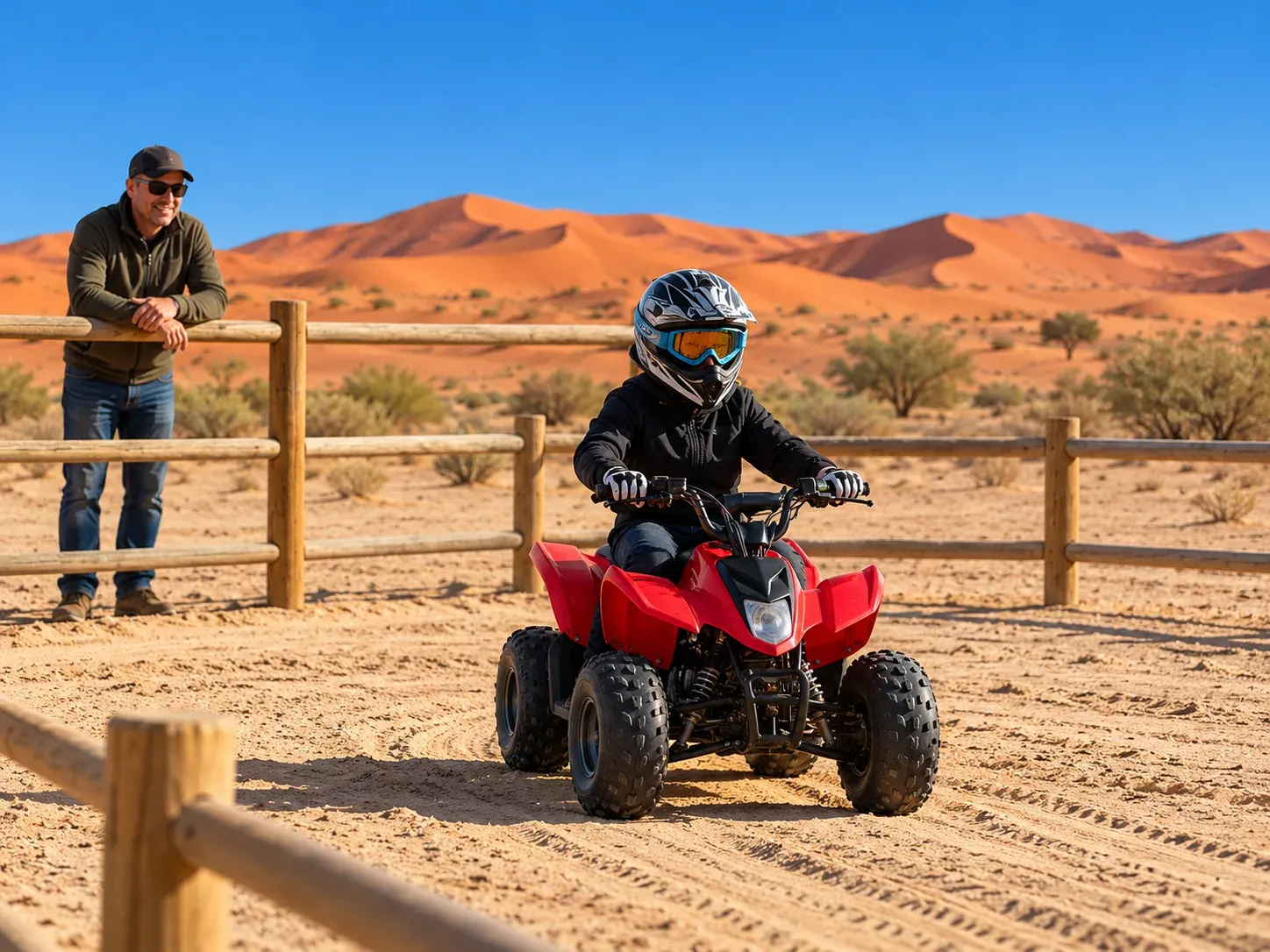
Match the buggy to the terrain and driving style
Once the purpose is clear, look closely at the vehicle type. Buggy horsepower is useful to understand, but it should not be the only measure. More power can help on climbs and deep sand, yet it also rewards smooth inputs. A strong buggy in the hands of a rushed driver can be harder to control than a modest one driven with patience.
Weight, wheel size and suspension also affect how a buggy behaves. A lighter vehicle can feel nimble on dunes, while a longer wheelbase may feel more stable when the track is uneven. Suspension travel helps absorb bumps and ridges, but it does not remove the need to slow down before steep drops or hidden dips. Ask how the buggy is suited to the route, rather than relying on model names alone.
Automatic transmissions are usually easier for first-time drivers because they reduce the number of decisions while the terrain is changing. Manual options can suit drivers who like more control over engine response, but they add workload on sand. If the route includes tight turns, hill climbs and descents, steady low-speed control is more useful than raw speed.
Passenger comfort deserves attention as well. Check whether seats are bucket style, whether there are headrests, and how passengers are held in place. Open vehicles expose everyone to sun, dust and flying grit, so eye protection and secure clothing are practical parts of the choice. A buggy with a clear layout and reachable controls tends to make the ride less tiring.
Check what is included before comparing offers
This is the point where many choices become clearer. A dune buggy rental dubai offer can look simple at first glance, yet the details behind it matter. Read what is included, what is optional and what remains the driver's responsibility. The aim is not to find the shortest list of exclusions, but to understand the terms before agreeing to them.
Start with the basics: the rental period, the route or driving area, and whether a guide is part of the package. If a guide is included, ask what the guide does. Some rides follow a set path with regular stops, while others allow more freedom within a marked zone. Knowing this prevents disappointment if you expect open-ended driving but receive a structured route.
Protective gear is another practical point. Helmets are a basic expectation for off-road driving, and a safety harness should be in good condition and correctly adjusted. Gloves, goggles and face coverings can make a noticeable difference in dust and heat. If gear is provided, check that sizes are available for everyone in the group. If gear is not provided, plan to bring suitable items.
Fuel policy is worth reading carefully. Some rentals start with a full tank and expect the same at return, while others include fuel or charge by use. Ask what happens if the route runs longer than planned. Clear terms here are better than assumptions, especially when the desert has few obvious reference points and the ride can take longer than expected.

A damage waiver also needs attention. It does not make careless driving harmless, and it may not cover every part of the buggy. Look for the conditions attached to it, including what counts as excluded damage, who reports damage, and when it must be reported. Ask what happens after a rollover, a collision or damage to suspension parts. If the answer is vague, treat that as a warning sign.
Confirm the safety setup and route limits
Safety checks should be straightforward and visible. Before accepting a buggy, walk around it and look for obvious damage, loose parts, leaking fluids or worn tires. Inside, check that seats are firmly mounted, seat belts latch cleanly, and the steering wheel feels secure. These are simple observations, not mechanical repairs. Anything that looks wrong should be reported rather than tested.
Ask about recovery support and communication. Desert driving carries a real chance of getting stuck, particularly after rain, near steep dunes, or in soft sand. A responsible setup should have a clear plan if a buggy cannot move or a driver becomes unsure. Find out how guides stay in contact, what happens if the group separates, and where the route begins and ends.
Weather conditions can change how a buggy handles. Heat affects both driver and vehicle, while wind can blow sand across the track and reduce visibility. Rain can make sand firmer in some places and softer in others, which changes traction without always being obvious. If conditions are poor, a shorter or guided route is often the wiser choice. Avoid treating a booking as a promise that the terrain will feel the same every day.
Driving rules should also be clear. Stay within agreed areas, keep a safe distance from other vehicles, and avoid sudden turns on steep slopes. Sand dune navigation rewards smooth steering and steady momentum. Cresting a dune too fast, cutting across a slope at speed, or following another buggy too closely can put everyone at risk. A good operator will explain these boundaries before the ride, not after a problem.
Compare value, not just headline features
After the practical checks, compare options side by side. Put the buggy type, group size, route, guide support, gear, fuel terms and damage terms in plain view. This makes it easier to see whether a lower headline figure actually leaves out items you would need anyway. It also shows when a higher figure reflects a better vehicle, a more structured route or clearer safety support.
Read recent reviews with a critical eye. Comments about cleanliness, punctuality, route quality and driver support can reveal patterns that a specification list cannot. One unhappy review does not prove much on its own, but repeated complaints about the same issue deserve attention. Praise is useful too when it describes specific details, such as clear instructions, well-maintained buggies or a route that suited beginners.

When choosing between similar options, favor the one that communicates clearly. A rental that answers questions directly about safety harness condition, fuel policy, route limits and damage waiver is easier to trust than one that relies on vague assurances. Clear communication before the ride usually leads to fewer surprises on the day.
Make the final choice with the whole ride in mind
The right choice is the one that fits the driver, passengers, route and conditions. A powerful buggy is not automatically the best pick, and a short ride can still feel worthwhile when the route is well matched and the safety setup is clear. Work through the decision in order: purpose, vehicle, inclusions, safety, route, then value.
Before confirming, repeat the main details back and make sure they are understood by everyone in the group. Confirm meeting arrangements, driving times, what to wear, what to bring and what happens if weather conditions change. With those points settled, the day is far more likely to feel organized from the first briefing to the final return.